

| Time | 11:00 – 12:40 |
| Location | ❷ Breakout 2 (CRCL PARK) |
| Capacity | 30 |
| Read the write-up on this workshop: https://www.tudelft.nl/2025/io/december/from-mud-to-models-a-workshop-on-regenerative-ai-futures And check also this video by visitor Ianus Keller. https://vimeo.com/1146630404/120c7ad277 |
What if our digital infrastructures grew from the ground up—literally?
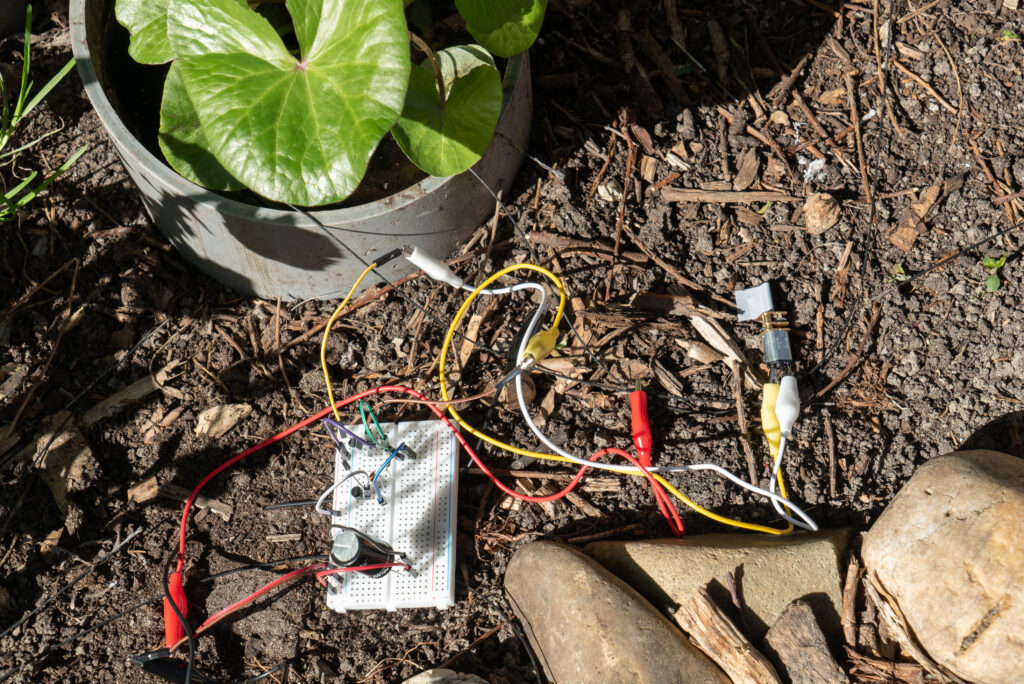
In this hands-on workshop, we’ll make electricity from mud using microbial fuel cells and earth batteries, then explore what these soil-based systems can teach us about building community-owned AI infrastructures.
Working with artist Sunjoo Lee and researcher Fieke Jansen from the Critical Infrastructure Lab, participants will use mud batteries to power small electronic devices, experiencing firsthand how energy can emerge from regenerative biological processes rather than extractive systems. This tangible practice reveals principles of distributed, resilient, and symbiotic infrastructure design.
Read about the workshop in this report:
https://www.tudelft.nl/2025/io/december/from-mud-to-models-a-workshop-on-regenerative-ai-futures
We’ll then shift from soil to servers, using the “People’s Compute” framework to examine how these principles might fundamentally reshape AI infrastructure. Rather than focusing on individual AI applications, we’ll address the deeper infrastructural layer—questioning centralized cloud computing and resource-intensive data centers while envisioning collective alternatives that prioritize people and planet over capital and control. A graphic facilitator will capture the discussion in real-time, creating an evocative visual map of our collective thinking.
No technical experience required. Leave with the experience of making mud batteries, visual documentation, and new frameworks for imagining technological futures scaled for communities, not monopolies.
Hosts
Dr. Fieke Jansen is a Postdoc at the UvA and a co-PI of the critical infrastructure lab, her research interest is to understand how the material impact of expanding infrastructures is shaping the management, distribution, and depletion of natural resources.
Sunjoo Lee is an interdisciplinary artist working across art, technology, and ecology, based in the Netherlands. Her practice reimagines the use of electronics and digital tools beyond human-centred purposes, exploring more-than-human philosophy, emergence, biomimicry, symbiosis, and permacomputing.
Dr. Kars Alfrink is a postdoctoral researcher at TU Delft, focusing on contestable AI. His research investigates how to design public artificial intelligence systems so that they remain subject to societal control.
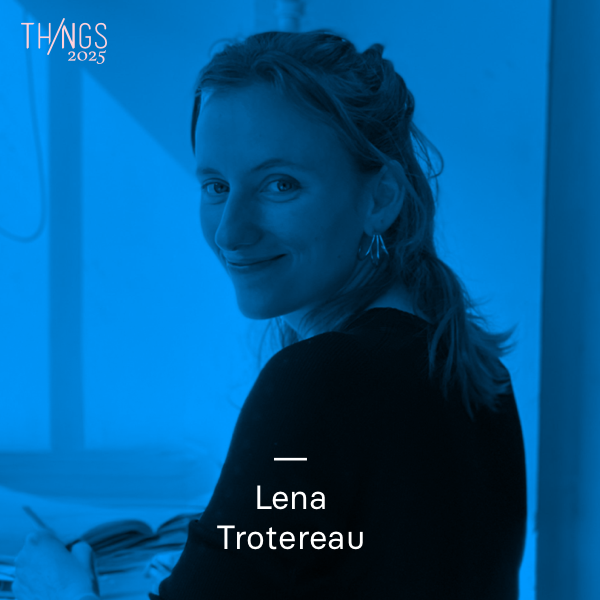
Lena Trotereau is a service designer, Illustrator, and facilitator. She uses design thinking and art to communicate complex topics in a way that energizes and clarifies. Her illustration projects included an educator decorum booklet, future vision roadmap, and illustrated generative research tools. Both in her design and illustration work, Lena is curious, open-minded and passionate about involving people.