

| Time | 14:15 – 15:55 |
| Location | ❻ Shanghai room (AMS level 3) |
| Capacity | 24 |
Join us to try out practical ways to bring strategic foresight tools into your everyday design practice.
In this hands-on session, you will explore concrete methods to combat the cognitive biases that subvert the adoption of truly transformative ideas. Through the example of the Futures of Everyday Objects, you will experience a set of fast futures thinking tools that you can use for any topic.
Perhaps you are used to imagining a radically changed future, but sometimes struggle to bring others along for the ride? Or you want to expand your creative toolkit with the power of futures thinking? Or you are intrigued by strategic foresight and want to know how it could be useful to you? This workshop will give you approaches that you can apply tomorrow.
You will come away with seven anticipatory questions to insert into your design process, plus a handful of simple canvas structures that shift design, planning & strategy conversations by leading you and/or your team to extrapolate into multiple futures.
Hosts

Susan LK Gorbet is a futurist, educator and secret weapon who mentors leaders & organizations on integrating anticipatory thinking into everyday practices. She has developed transformative programs to bring futures thinking, design thinking and facilitation to leaders & teams on six continents.
Previously, Susan spent many years spearheading software design projects in Silicon Valley, then co-founded a design firm specializing in creating surprise & delight through architectural-scale interactive interventions.
As an educator, Susan empowers executives, MBAs, undergrads & youth by shaping big concepts into useful tools. She has taught strategic foresight, innovation, facilitation, creative thinking, improv and many forms of design, and she holds a Master of Design in Strategic Foresight. Susan also led the development of a facilitated design curriculum & library that enabled young leaders to incite thousands of youth to believe that they can change the world.
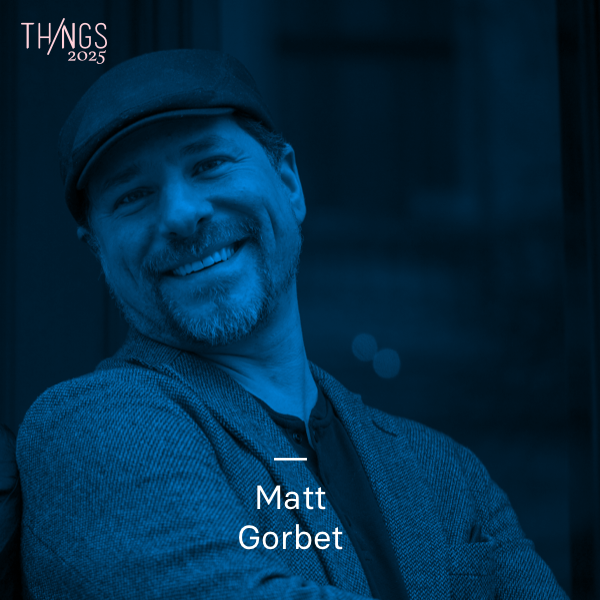
Matt Gorbet twists technology to create the unexpected. As a researcher in the Industrial Design Faculty at TUDelft he is currently establishing an infrastructure for distributed expressive robotics. Matt’s collaborative art+technology works have been exhibited internationally and installed permanently in retail, hospitality and educational environments, and he regularly consults on art+technology design and strategy.
Matt is a key contributor to the Living Architecture Systems Group, and is on the advisory board of the Calm Technology Institute. Among the first graduates of the Tangible Media Group at the MIT Media Lab, Matt went on to become a member of the research staff at Xerox PARC in the 1990s, where his multidisciplinary team pursued the speculative design of new document genres. He has developed and taught Physical Computing and other university level design courses. Matt holds several patents on novel interaction technologies.