ThingsCon Salon — RIOT 2026 Launch Event Report
Date: 21 August 2026
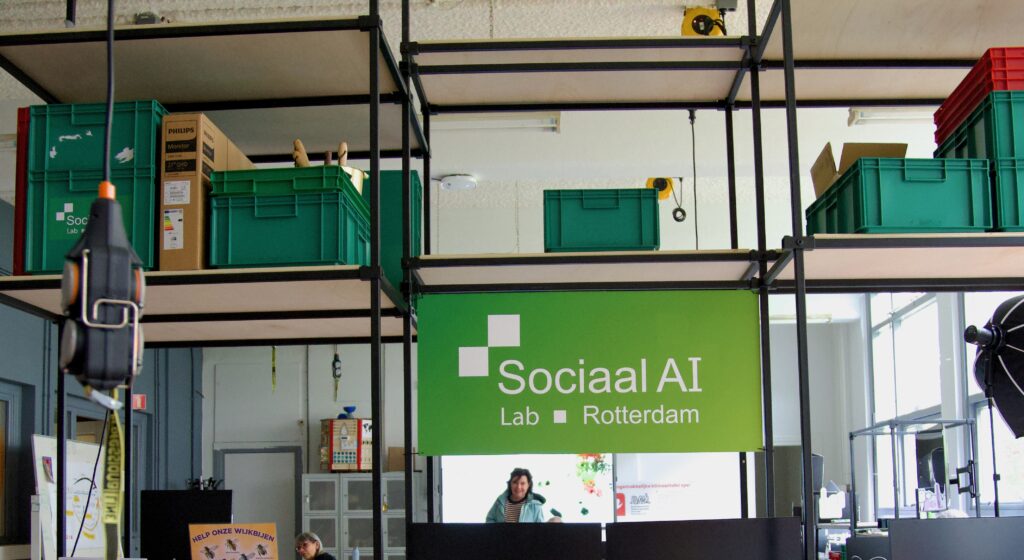
Location: Sociaal AI Lab, Rotterdam
Format: RIOT 2026 report overview and thank-yous, four contributor presentations, panel discussion, and physical book launch
This report is compiled with support of Claude from two transcript excerpts covering the full event: an opening segment (article overview, launch announcement, and the presentations by Martijn van Loon, Phil van Allen, and Kars Alfrink) and a second segment (Tiwánee van der Horst’s presentation, closing panel discussion, and the physical distribution of the printed report).
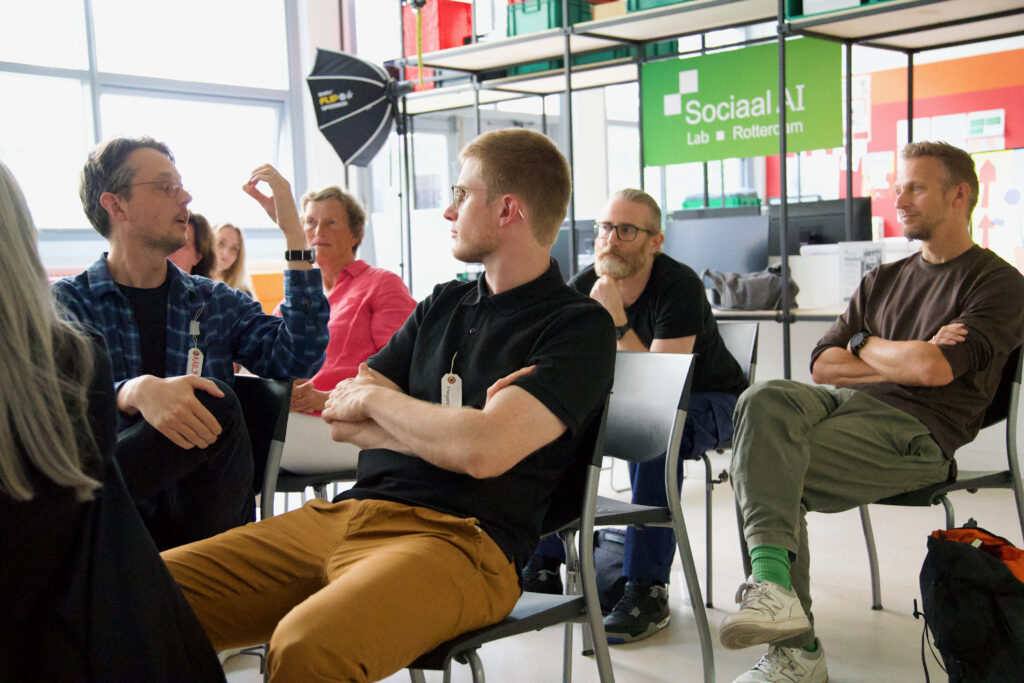
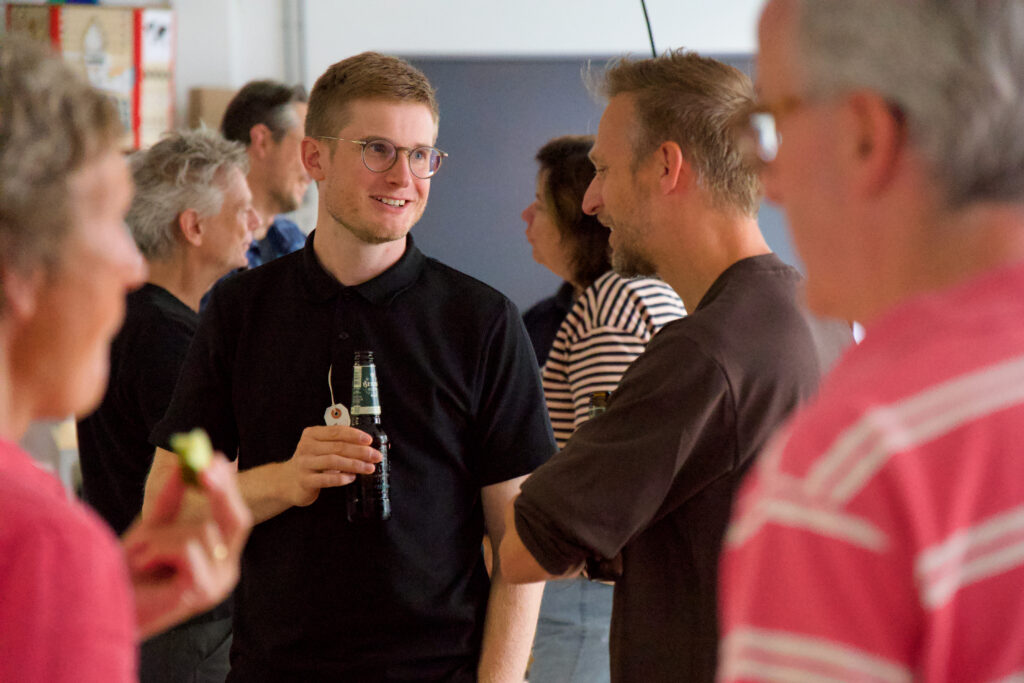
We started with a welcome by Iskander Smit and introduction of Sociaal AI Lab by Eva Kruijt.

RIOT 2026 Article Overview
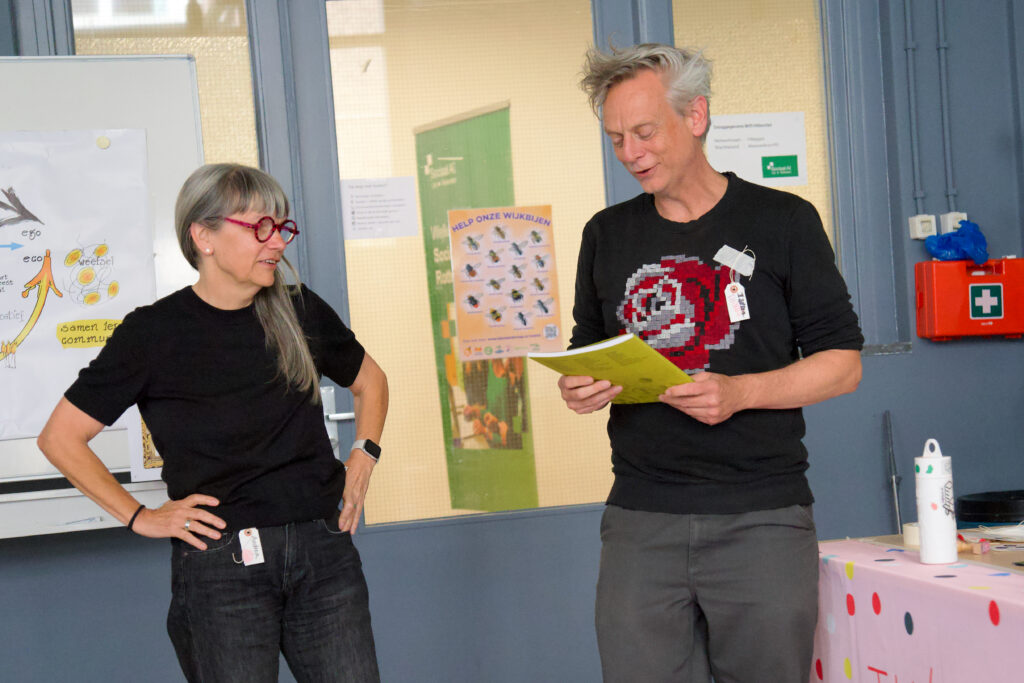
Speaker: co-editor of RIOT 2026 Andrea Krajewski
The session opened partway through a run-through of the report’s contents. Articles introduced include:
- Sen Lin, The Politics of Design — opens the collection with the premise that design artefacts are never neutral; they shape power, behaviour, and social norms, giving designers a choice between defensively avoiding harm or actively designing toward fairer alternatives.
- Martijn van Loon, Invisible debris: Rethinking digital waste in an era of perpetual storage – Illustrates political responsibility through an everyday yet invisible problem: digital waste, cloud storage and resource consumption.
- Joanna Montgomery, The Things We Cannot Throw Away — reframes materiality from ecological to emotional terms, treating objects as vessels of memory rather than pure resources.
- Phil van Allen, Uneasy Symbionts in the Clearing — argues for understanding AI as part of complex ecologies rather than through hype-driven framings.
- Iskander Smit, Rethinking Intelligence (article only, no accompanying talk on immersive AI and a “regenerative turn,” shifting AI away from centralized, large-scale systems toward local, relational, and collective intelligence.
- Kars Alfrink, Sunjoo Lee, Lena Trotereau, and Fieke Jansen, Mud and Models: Does Making Matter for Regenerative AI Speculation? — asks whether “making” matters for regenerative AI speculation, grounding AI debate in materially anchored practices like mud batteries.
- Maja Riemann, Arcane Designing — on the regenerative potential of magic, fantasy, and more-than-human worldviews as design resources.
- Albrecht Kurze (surname not given), Frankensteining IoT Design Methods — on deconstructing, combining, and revitalizing existing design methods.
- Maarten Lens-FitzGerald and Rob van Kranenburg, on their Canan Futures project — backcasting a new deal for mobile infrastructure, reimagining 6G as a citizen-led, democratic commons.
- Karola Köpferl and Albrecht Kurze — document an interactive art installation in an old garage in Chemnitz, featuring a rotary phone that lets visitors “talk” to the other objects in the space.
- Peet Sneekes — contributed Hot Takes, an interview series recorded during ThingsCon 2025, described as an open forum for voices of friction, available on YouTube.
- Student contributions — teams from TU Delft and Amsterdam University of Applied Sciences presented projects at ThingsCon 2025 (on topics including AI-supported accessibility and sustainable design); four audience-voted favorites were included in the report with accompanying text and images.
On the purpose of the report: the editor framed RIOT as an attempt to prolong discussions from ThingsCon and its Salons, to facilitate dissent, and to make specialist knowledge accessible outside disciplinary bubbles — describing the ambition as being “slow enough to allow thoughts to be explored in depth and agile enough to pass them on.”
Acknowledgments were extended to all contributing authors; to IMD-F (Darmstadt, Germany), a nonprofit supporting science and the arts in interactive media; to the Simplifications project at Chemnitz University of Technology (run by Albrecht Kurze); to CLICKNL (the Dutch Creative Industries Knowledge and Innovation Network), a longstanding ThingsCon supporter; to the Sociaal AI Lab for hosting.
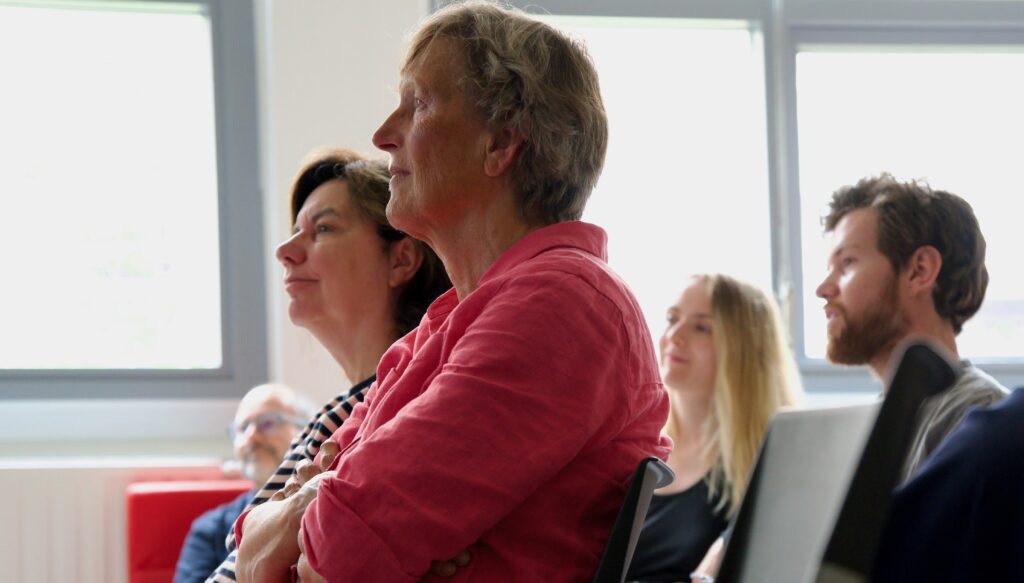
Presentation: “Invisible Debris” — Digital Waste and Materiality
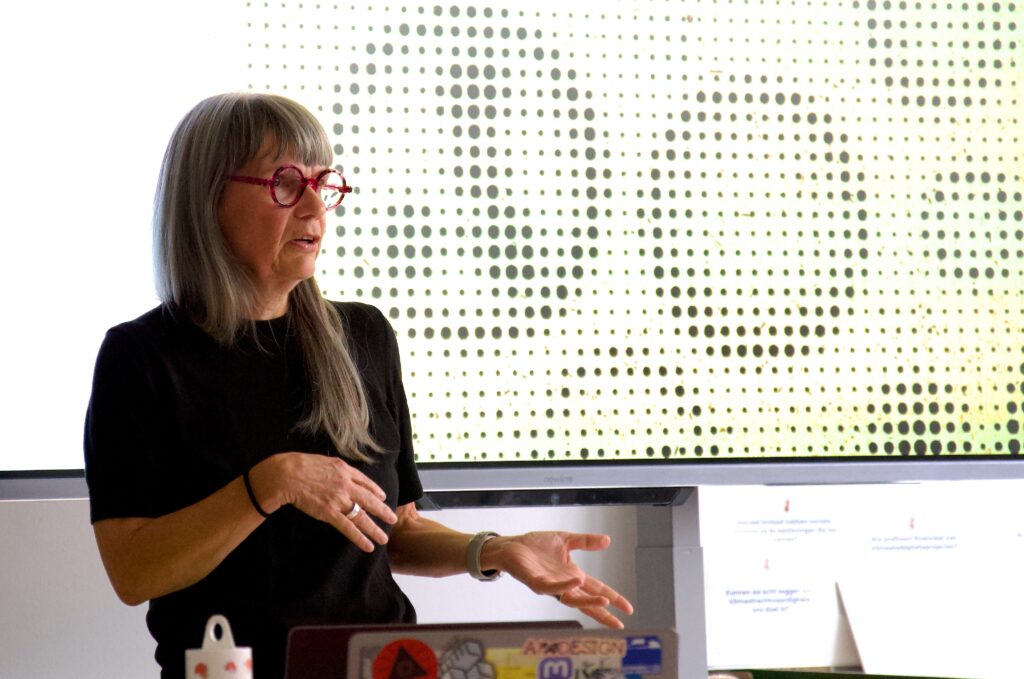
Speaker: Martijn van Loon
Trained originally as a product designer in Delft with a focus on sustainability and materials, van Loon moved into digital design before returning to sustainability-focused work as an independent designer. His article and talk trace an investigation into digital waste.
Starting point: widely cited claims that the internet’s emissions rival aviation’s prompted him to look past the aggregate statistic and into what’s actually accumulating — noting that even as some tech infrastructure becomes more efficient, the growth in digital demand is outpacing the shift to renewables, competing with other sectors for limited green energy.
Personal trigger: running into “storage full” warnings on his own accounts, and realizing how much stored data — old rental-car photos kept “just in case,” notification emails long past their usefulness — no longer served any purpose but continued consuming energy indefinitely because deleting felt effortful or risky.
Method: desk research plus workshops with design professionals to understand where digital waste accumulates in practice. He deliberately reframed “emissions” into three more concrete, physically graspable categories: electricity (devices), water (data center consumption), and materials (hardware, chips). This became a visual and workshop language.
Dutch Design Week & ThingsCon workshop: he built a tangible workshop format — sensors and lights to represent electricity, a “water slurper” device to move water between vessels representing data-center water use, and physical materials to represent hardware/chip sourcing. Participants mapped their own digital services against these elements and built physical collages/flowcharts of where their data actually “lived” (e.g., cold storage/archive vs. active use vs. disposal). Water, in particular, produced strong reactions — treating a cup of drinking water as something being “fed” to a system reframed usage as a deliberate, felt act.
Themes from interviews, incorporated as four principles in the article:
- Data doesn’t disappear by default — designers should consider expiration/discard dates rather than relying on users to actively hunt down and delete things.
- Much digital waste is unintentional — better default system design (not individual vigilance) should carry more of the burden.
- People are broadly reluctant to delete, driven by “I might need it later” anxiety, even when the cost of keeping something outweighs its near-zero chance of future use.
- With AI tools now embedded everywhere, it’s easy to “overpower” a task — using energy-intensive tools (e.g., generative AI for a simple search) without any feedback signal that a lighter-weight option existed.
Next steps mentioned: developing an installation for an annual digital cleanup day that scans a user’s Gmail for unread messages and visualizes/clears accumulated digital waste — extending the tangible workshop format into a public installation.
Q&A: Asked how aware the general public is of this issue, van Loon noted awareness is low outside people already drawn to the topic, though AI has recently increased press attention. He cited a client project where switching a homepage’s image weight produced emissions reductions far larger than what an individual could achieve through personal lifestyle changes, arguing designers hold outsized leverage that individual behavior change doesn’t.
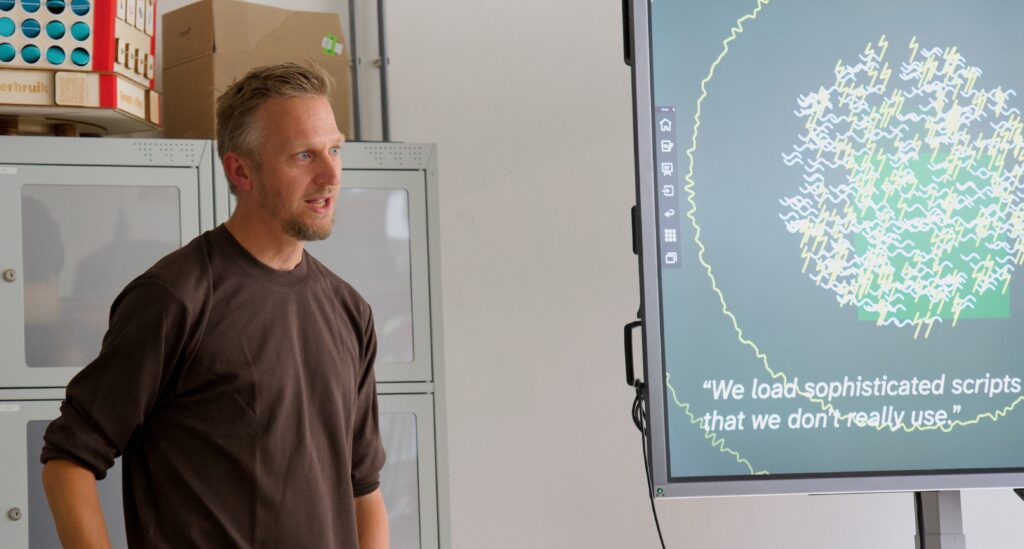
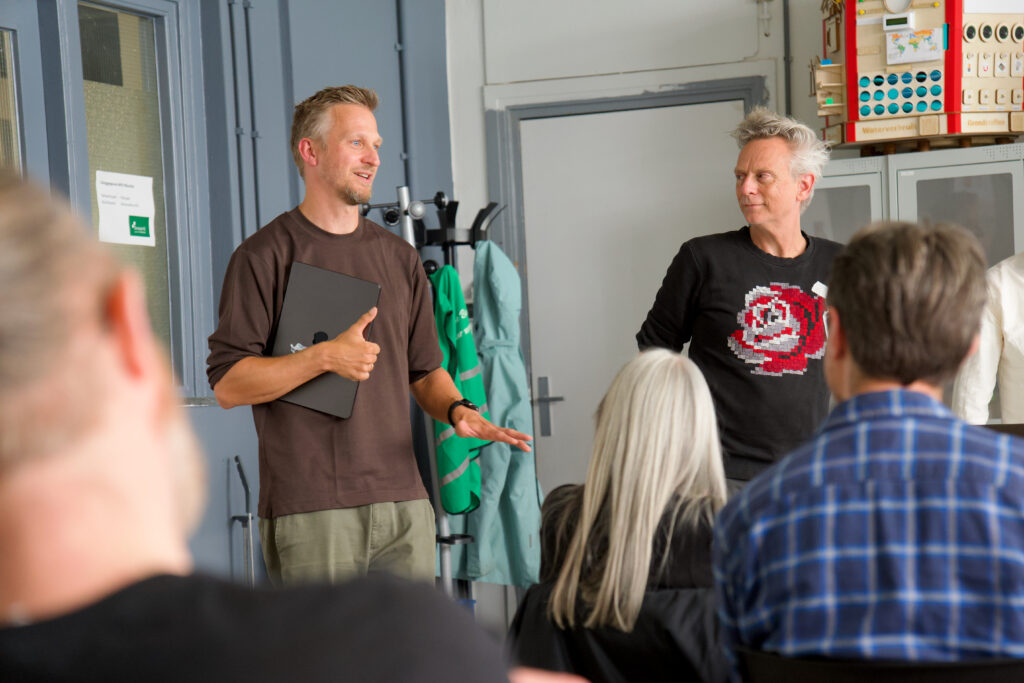
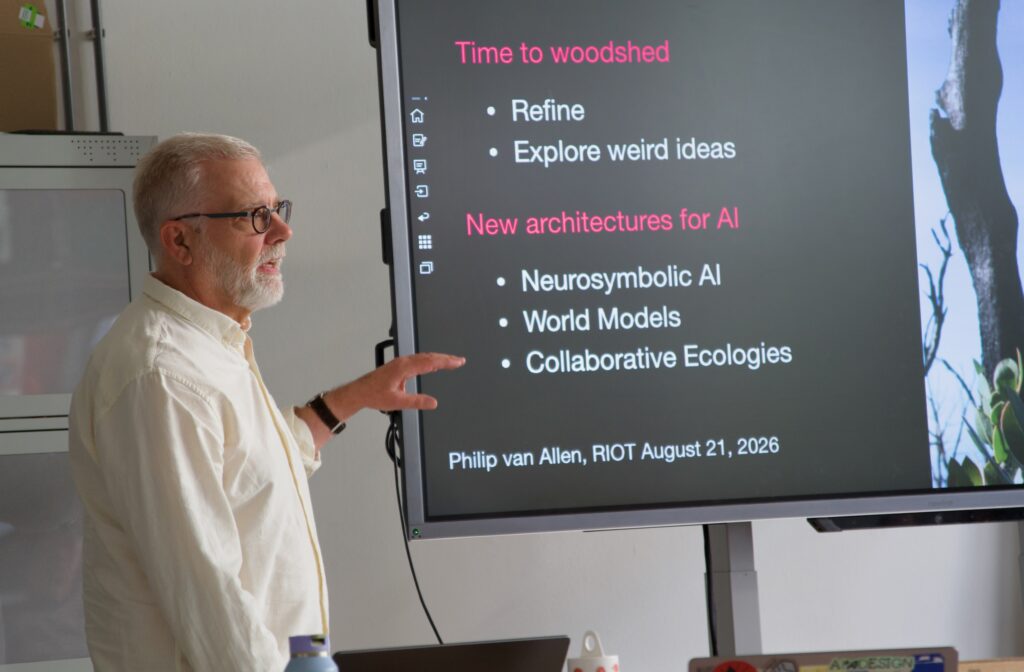
Presentation: “Uneasy Symbionts in the Clearing”
Speaker: Phil van Allen — Professor Emeritus, independent researcher, conceptual prototyper, and consultant focused on animism as a metaphor for AI interactions; founding member of the Media Design Program at ArtCenter College of Design, and a former researcher/program coordinator at TU Delft, IDE.
Central metaphor: rather than the common “AI bubble” framing, van Allen proposed the wildfire — illustrated with 2025 Los Angeles wildfire imagery. Wildfires are devastating, but they also create clearings that enable regeneration; he argued a coming AI “bubble burst” (or at least a moment of reckoning) creates a similar opportunity to rethink what AI is for, rather than only mourning what’s lost.
Stakes named: resource consumption, labor disruption, changes to public life (including AI’s addictive qualities), and the use of poorly understood AI systems by governments, including in military contexts — with the people most affected typically having no agency in or recourse against these systems.
Critique of the dominant framing: AI as a solutionist, obedient, capital-serving tool assumes corporations are the only stakeholders whose interests matter — a pattern he compared to social media’s earlier trajectory of turning users into engagement-generating instruments for platforms.
Proposed alternative framing — AI as part of a “collaborative ecology”: a web of interdependent entities (humans, organizations, computational “symbionts,” infrastructure, culture, non-human life), each with their own agency and interests, producing emergent behavior different from the sum of the parts. Influences cited: more-than-human design, his own earlier work in animistic design (using mythology/storytelling as mental models for AI systems), and a former student’s project, Driverless Government, imagining a city council meeting that includes non-human participants (a coyote and mountain lion, both indigenous to the Los Angeles hills).
Technical directions gestured at: neurosymbolic AI, world models grounded in the physical world rather than pure next-word prediction, and causal AI.
Three design provocations from the article:
- Surface the ecology in the interaction — e.g., a “nutrition label” for AI products disclosing energy, water, and social costs (echoing Martijn van Loon’s talk).
- Design for refusal and negotiation — building on Kars Alfrink’s work on contestable AI; AI systems should not present themselves as speaking truth unchallenged.
- Design for non-human participation — illustrated with a proposed civic deliberation installation mediating disputes over distressed coastal wetlands (farmers, water allocation, birds, salinity, surrounding cities), using sensors, spatial audio, and projection to let participants engage with the ecosystem directly.
Closing framing: the most interesting AI design challenge isn’t utility, but designing “uneasy symbionts” — provocative, sometimes disruptive participants embedded in ecological cycles rather than standing outside them. He tied this explicitly to the RIOT 2026 theme: Resize the ambition of AI, Remix the choreography of interaction, Regenerate by tending to what grows back.
Q&A: A question about regulatory/governmental authority (e.g., data protection authorities) drew a response favoring encouragement of more local, on-device AI, skepticism toward how “open” so-called open-source AI models really are (given inaccessible training data), and support for AI “nutrition labels” disclosing real costs.
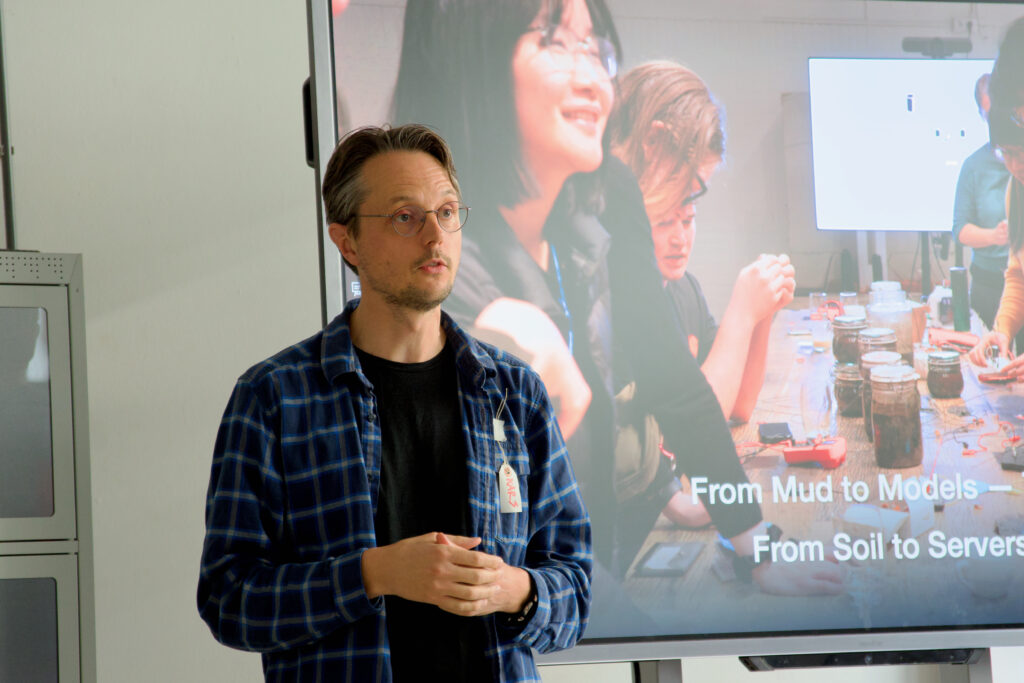
Presentation: “Mud and Models” — Grounded Futures
Speaker: Kars Alfrink, presenting on behalf of co-authors Sunjoo Lee, Lena Trotereau, and Fieke Jansen
The essay reflects on a workshop format built around mud batteries (microbial fuel cells) — jars of riverbed mud whose microbial metabolism generates a small but real electrical current, enough to power a small clock.
Workshop structure, run first at ThingsCon (December 12, 2025, titled “From Mud to Models”) and later at Creative Coding Utrecht (March 27, 2026, retitled “From Soil to Servers” to address “AI fatigue” among participants and signal a connection to computing more broadly):
- A framing talk by Fieke Jansen on the extractive nature of dominant AI practices.
- A talk by Sunjoo Lee on her art practice building mud-battery-powered “electric gardens.”
- A hands-on activity where participants built their own mud battery devices.
- A futuring exercise adapting the value scenarios method — but grounded by asking participants to speculate about regenerative AI futures starting from a specific surprising moment they experienced while building the device, rather than from an abstract prompt. (Lena Trotereau live-illustrated the sessions throughout.)
Outcomes from participants were mixed: some imagined poetic, ecologically attuned devices (cricket-like indicators of ongoing mud remediation, glow-worm streetlights, clocks whose pace reflects fluctuating, seasonal microbial electricity rather than constant grid power); others speculated toward less utopian ends (industrial-scale mud-powered computing, personal mud batteries as doomsday-prepper equipment). Alfrink characterized the results as suggestive rather than a clean success or failure, and used this ambiguity to motivate the essay’s theoretical contribution.
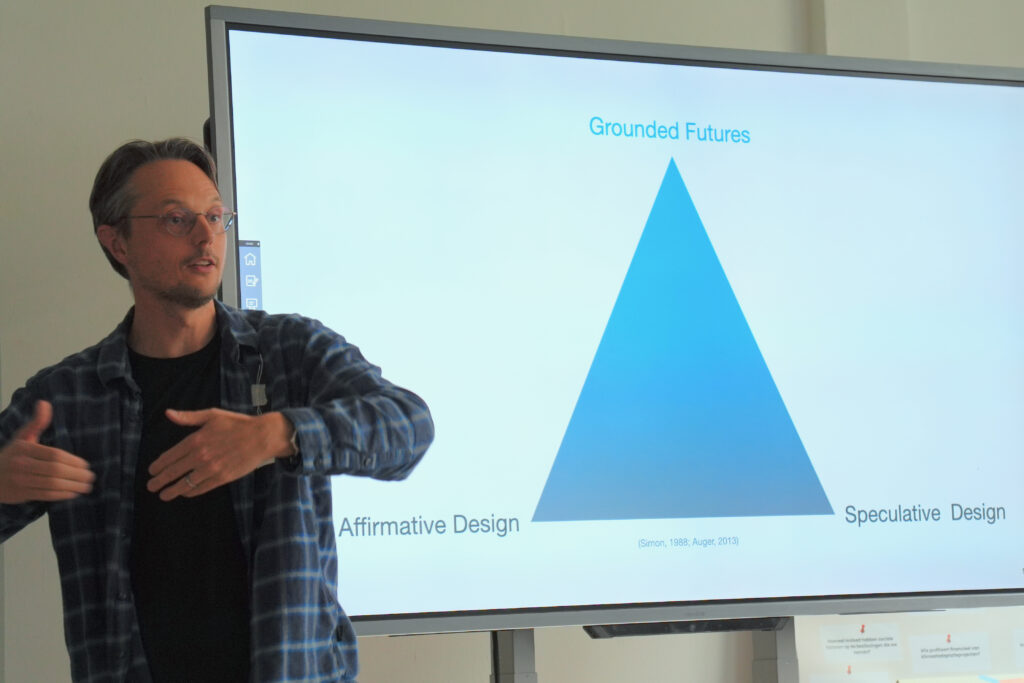
Theoretical framing — “grounded futures”: Alfrink positioned this as a synthesis addressing a gap between two established design-futures traditions:
- Affirmative design, which improves existing situations toward preferred ones, but risks being a “thin veneer” on dominant practice (including in AI).
- Speculative design, which extrapolates current trends to critique the present, but risks becoming disconnected “gallery objects” with little material purchase.
He also named a third difficulty from his own commitment to political realism — rejecting design approaches that start from a presumed-universal moral principle (e.g., “fairness” in mainstream responsible-AI discourse) in favor of starting from what specific existing groups find desirable for themselves. Taken alone, this risks becoming “barren” — offering no clear direction for a desirable future.
Grounded futures attempts to combine both traditions: taking speculative design’s storytelling-through-artifacts and affirmative design’s grounding in existing, working situations. Central to this is the concept of the “real utopia” (borrowed from political theorist Erik Olin Wright) — a prefigured alternative that is attentive to real-world viability and trade-offs rather than purely aspirational. Sunjoo Lee’s ongoing network of electric gardens was offered as a live example: not merely speculative, but functioning, community-forming infrastructure.
Open questions acknowledged: Alfrink was explicit that the workshop format doesn’t yet resolve whether this approach produces genuinely different outcomes from ordinary speculative or affirmative design, framing further refinement — connecting the method to existing practices such as the Sociaal AI Lab’s own work — as ongoing work.
Presentation on Ecological AI Literacy and More-Than-Human Design
Speaker: Tiwánee van der Horst
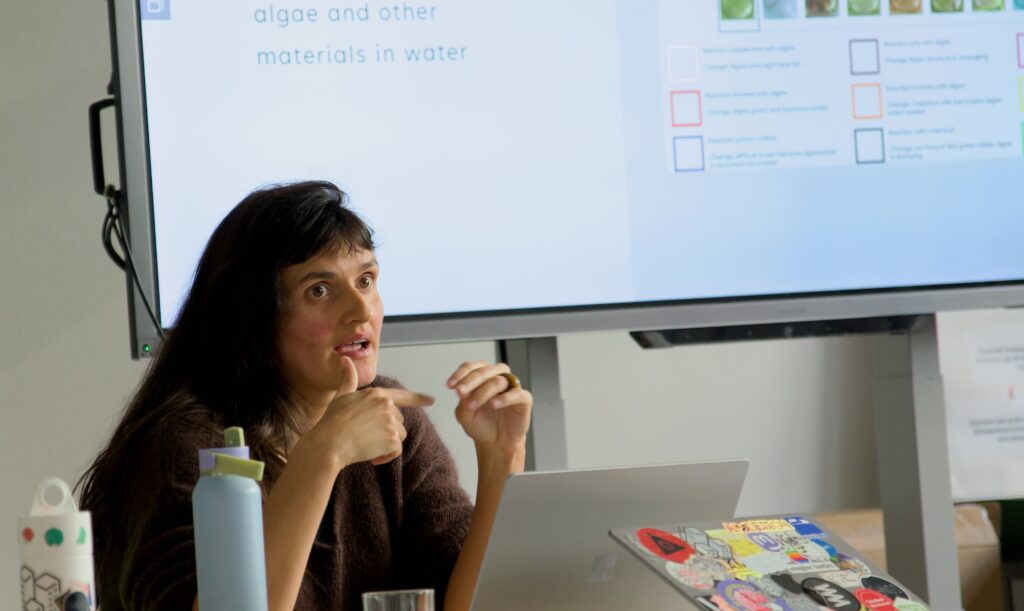
Van der Horst presented research building on her earlier object-based work on power relations in AI (Who Pulls the Strings of AI), moving into ecological AI literacy education and a workshop using algae cultures as a physical proxy for the ecological consequences of AI design choices.
- Contextualized the ecological footprint of AI across model design, training, interface, application, hardware, data waste, and reporting, noting the EU AI Act’s minimal environmental guidance and the underrepresentation of biosphere-related Sustainable Development Goals in AI ethics curricula.
- Described a workshop where participants estimate an AI use case’s ecological footprint and translate it into a “recipe” (adding copper, iron, aluminum, or soap) for an algae culture, whose health over time becomes a felt proxy for design decisions.
- Ran the workshop with designers/artists/researchers at Het Nieuwe Instituut (10 participants) and computer science students at Hogeschool Rotterdam (13 participants), finding hermeneutic (curiosity/exploration) sensibilities most activated overall, with design-background participants moving further toward existential thinking than CS students.
- Identified professional identity and disgust reactions as factors limiting engagement with the non-human material.
- Reported that a longer-running (unanalyzed) version of the workshop surfaced participant desire for more care-oriented, social engagement — most algae cultures “died,” leaving most participants feeling they had only enacted harm — prompting plans to redesign the assignment around keeping the algae alive.
- Announced a further public workshop on October 1st at the Doelen (Erasmus University).

Panel Discussion Highlights
- Politics and urgency: a parallel was drawn between “I’m just a technology person, this has nothing to do with nature” attitudes among some CS students and Dutch farmers’ framing of themselves as separate from nature in the Natura 2000/nitrogen debate — read as reflecting a broader societal disconnect requiring political, not just educational, intervention.
- Slowing down vs. urgency: van der Horst named the tension between AI’s speed and nature’s need for slowness as the central paradox of her work.
- Storytelling as a bridge to policy: in response to a question about narrative structures across the day’s talks, Kars Alfrink described his adapted value-scenarios method as light-touch scaffolding, distinct from the more structured design-fiction approach (in the style of the Near Future Laboratory) he uses in a master’s course co-taught with Sara Colombo. He cited Dan Hill’s Dark Matter and Trojan Horses on how design prototypes can feed into policy change, while cautioning that storytelling can also be co-opted — noting how tech industry figures have been shaped by (and sometimes willfully misread) science fiction.
- Extending to the neighborhood: an audience member asked about adapting the mud-battery or algae formats for local residents; Alfrink pointed to Sunjoo Lee’s existing electric garden in Utrecht (and her published gardening manual) as a scalable, replicable template, noting the practical challenge of getting people to participate in person.
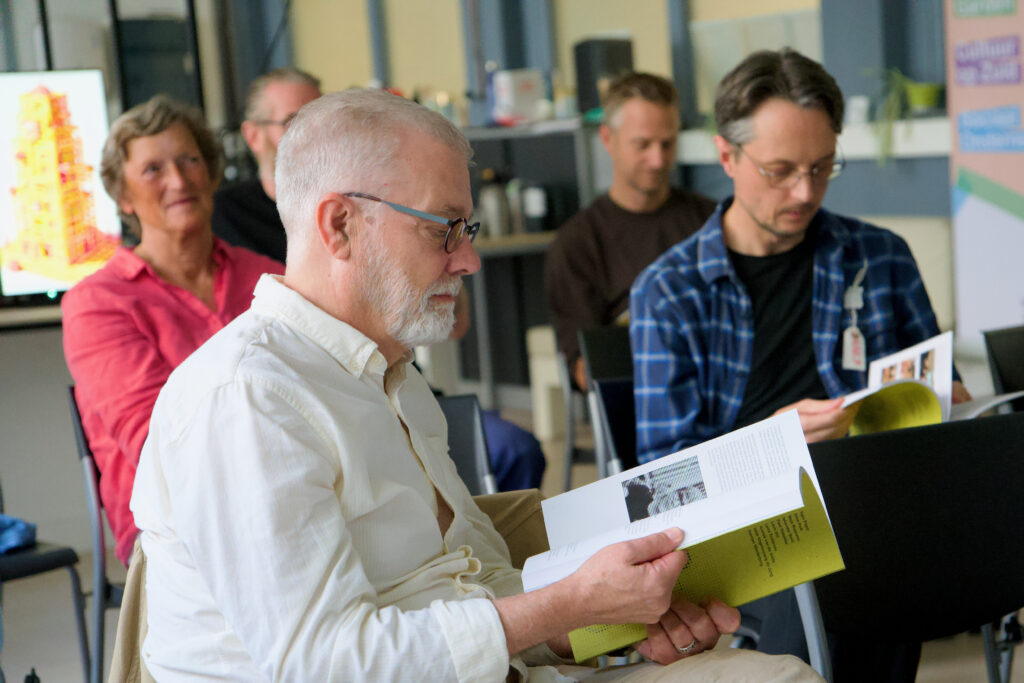
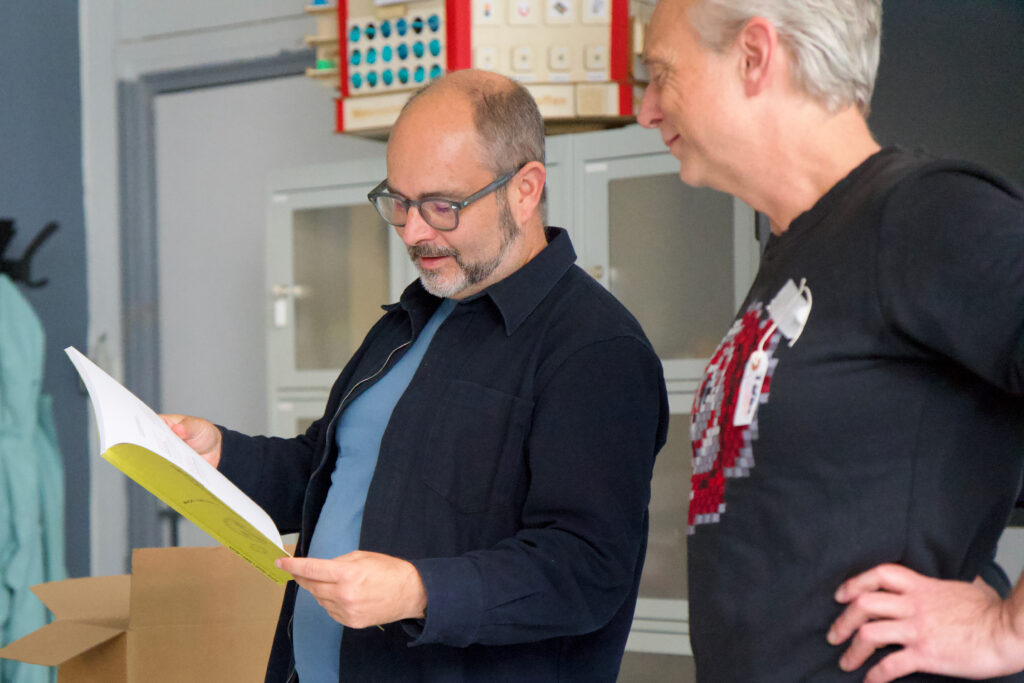
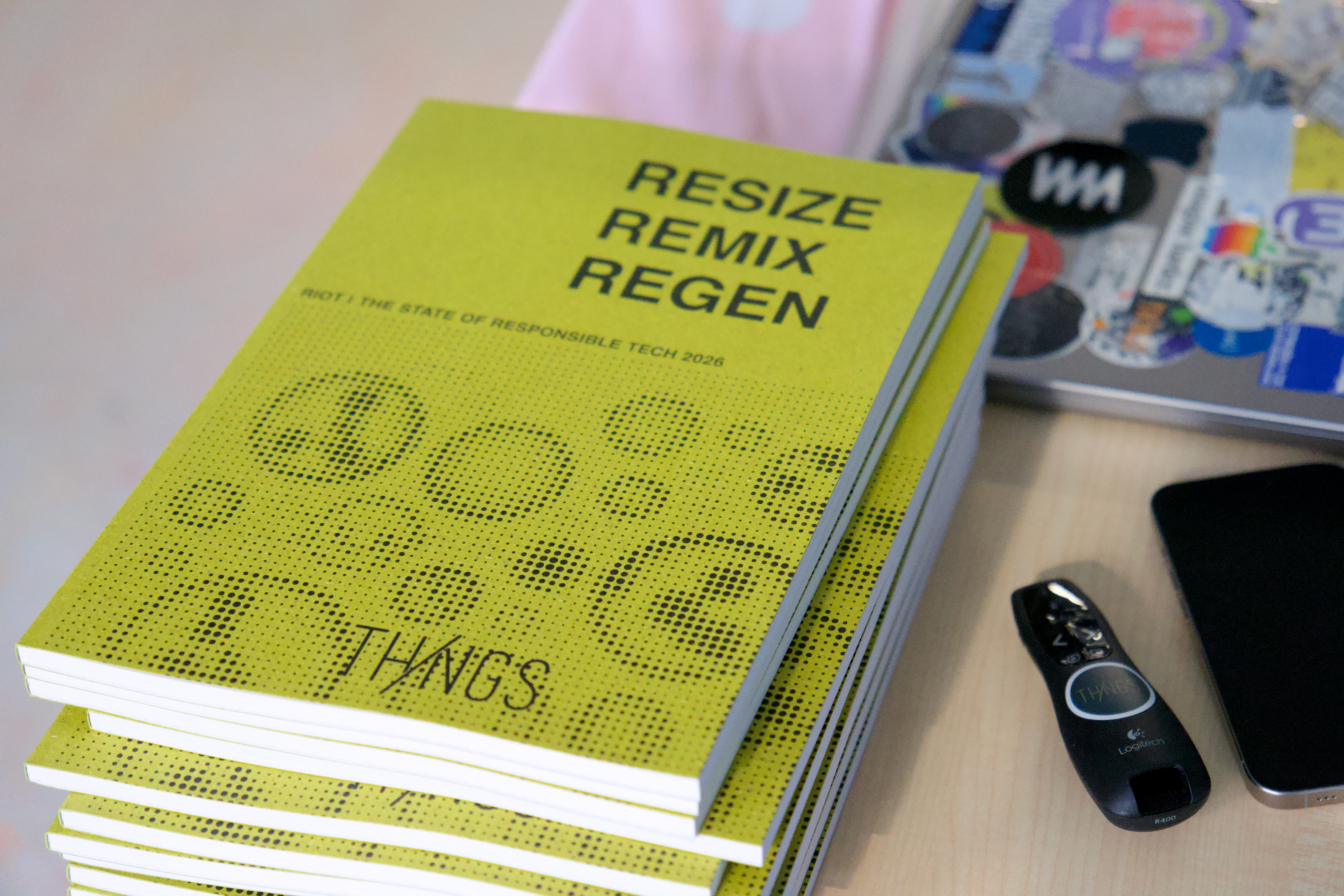
Following the talks, the printed RIOT 2026 report was physically distributed:
- The paper stock is 50% “green material” (recycled, with a distinct scent attendees were invited to notice).
- Copies were handed out to attendees and contributors, with a PDF version also confirmed available via the ThingsCon website.
- The event closed informally, with attendees browsing contributor names and discussing overlaps with related work (e.g., civic interaction design from public values, more-than-human research on energy).